Why Your Brain Craves Predictability in an Unpredictable World

Your brain is not built for chaos. Full stop.
Every second of every day, your nervous system is running one silent, relentless calculation: Is this safe or not? When it can't answer that question fast enough, it panics. And panic looks a lot like anxiety, brain fog, poor sleep, and the inability to focus on anything for longer than four minutes.
Here's the truth: unpredictability is not just uncomfortable. It is biologically expensive.
The Prediction Machine Inside Your Skull
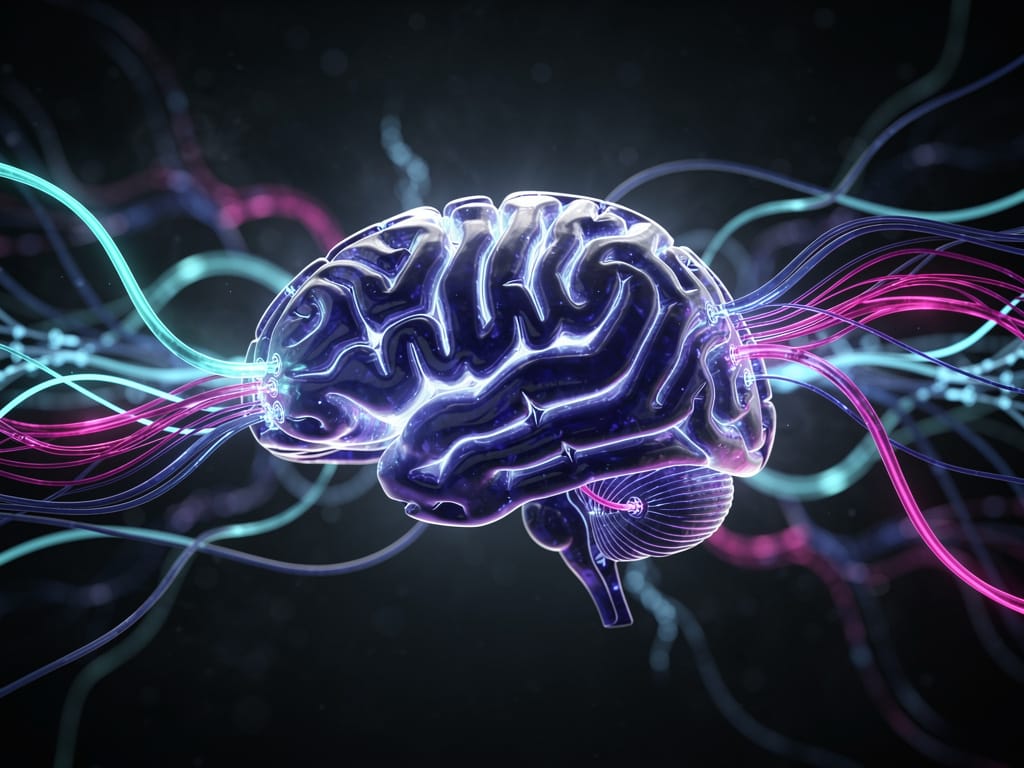
Neuroscientists call it the predictive processing model. Your brain does not passively receive information - it constantly generates predictions about what will happen next, then checks reality against those predictions.
When reality matches the prediction? Smooth. Efficient. Calm.
When it doesn't? Your brain fires a prediction error signal. Resources get redirected. Cortisol spikes. The prefrontal cortex - your rational, focused, creative brain - gets sidelined by the amygdala, which is basically your internal alarm system.
This is why a single unexpected email can derail your entire afternoon. It's not weakness. It's wiring.
- Routine lowers cognitive load - your brain stops spending energy predicting and starts spending it creating
- Familiar environments reduce cortisol - even small sensory anchors like a consistent morning scent or sound signal safety
- Predictable sleep schedules regulate the nervous system at a hormonal level, not just a behavioral one
- Repetitive, rhythmic activities - walking, breathing exercises, even washing dishes - activate the parasympathetic nervous system
- Micro-rituals reduce decision fatigue - fewer choices mean less mental friction across the entire day
Chaos Is Cumulative. So Is Calm.

Here's what most people miss: you don't need to control the world to calm your brain. You need to control enough of it.
Research from the University of Southern California found that people who maintained even two or three consistent daily anchors - a fixed wake time, a structured lunch break, a short evening wind-down - reported significantly lower perceived stress than those with fully fluid schedules, even when their external circumstances were equally chaotic.
The brain doesn't need everything to be predictable. It needs islands of certainty in a sea of noise.
Think of it as giving your nervous system somewhere to land.
Don't miss out on future updates!
Join our newsletter to get the latest insights delivered straight to your inbox.
What This Looks Like in Practice
Start small. Aggressively small.
Pick one anchor for the morning and one for the evening. That's it. A consistent wake time plus five minutes of stillness before your phone. A fixed dinner hour plus ten minutes of reading before bed. These are not productivity hacks. They are neurological signals that tell your brain: this part of the day is known. You can stand down.
Over time, those signals compound. Your baseline cortisol drops. Your concentration sharpens. Sleep deepens. Not because your life got easier - but because your brain stopped burning fuel on constant threat-scanning.
The science is blunt: predictability is a stress management tool, and most people are not using it.
You don't need a perfect life. You need a reliable rhythm inside an imperfect one. Your brain will do the rest - because that is exactly what it was designed to do when you stop flooding it with noise and finally give it a pattern to hold onto.