How to Take a True Break: Disconnecting From Technology Without Guilt

A true break is not just a pause from work. It is a pause from input. In a world where rest often means switching from emails to social media, from deadlines to videos, and from one screen to another, many people finish their “breaks” feeling just as tired as before. The body may be sitting still, but the mind is still processing, comparing, reacting, and absorbing.
This is why disconnecting from technology matters. Not because technology is bad, but because the brain needs quiet spaces where it is not being asked to respond. Constant checking has been linked with higher stress levels, especially among people who frequently check emails, texts, and social media.
The problem is that many people feel guilty when they unplug. They worry they are being lazy, unavailable, unproductive, or irresponsible. But taking a true break is not avoidance. It is maintenance.
Why Screen Breaks Often Don’t Feel Restful
Many digital “breaks” are not breaks at all. Scrolling gives the illusion of rest because it requires little physical effort, but mentally, it keeps your attention active. You are still receiving information, reacting emotionally, and switching focus every few seconds.
Research on digital detox is mixed, which is important to understand. Some studies suggest that reducing social media can improve anxiety, depression, or sleep in certain groups, while other research finds that simple abstinence does not automatically improve well-being for everyone.
That means the goal is not to disappear from the internet completely. The goal is to create intentional space where your nervous system can settle.
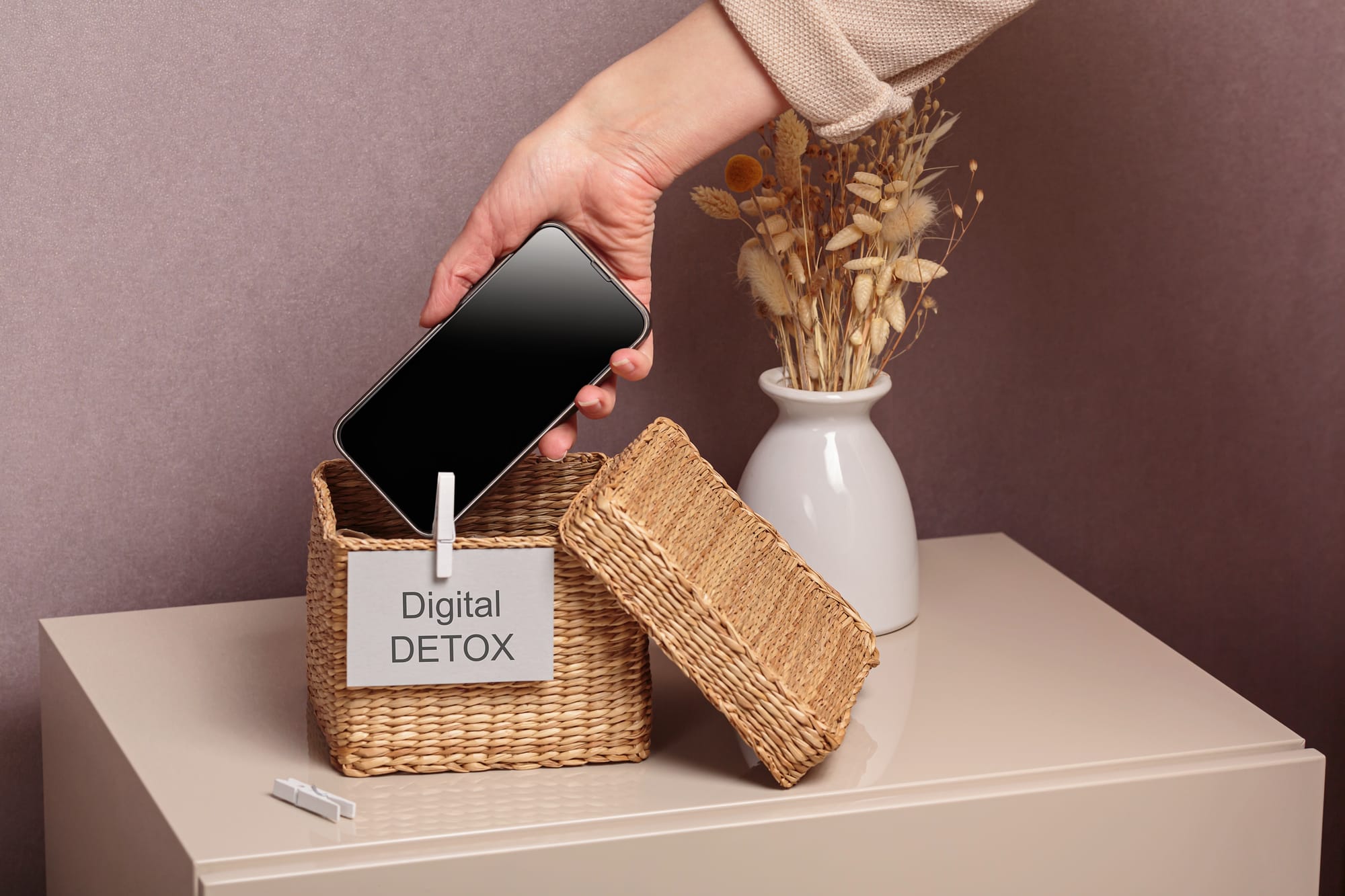
Start With a Small, Clear Boundary
The easiest way to disconnect without guilt is to make the break specific. Instead of saying, “I need to use my phone less,” try:
“I’m taking 20 minutes without screens after lunch.”
This feels manageable and realistic. You are not rejecting your responsibilities. You are creating a short protected space.
A true break can be simple: walking outside, making tea without your phone, stretching, sitting near a window, journaling, or doing nothing for a few minutes. The key is that your attention is no longer being pulled by notifications, feeds, or messages.

Your attention is not meant to be available 24/7. Protecting it is not selfish — it’s necessary
Tess.
Replace Guilt With Purpose
Guilt often appears when rest feels undefined. If you do not know why you are taking a break, your mind may label it as wasting time.
Before disconnecting, give the break a purpose:
“I’m resting my attention.”
“I’m calming my nervous system.”
“I’m giving my brain space to recover.”
“I’m choosing real rest instead of more stimulation.”
This small shift changes the meaning of the break. It becomes intentional, not passive.
Create a Gentle Re-Entry Ritual
Many people avoid unplugging because they fear what they will return to: unread messages, tasks, notifications, or missed updates. A re-entry ritual helps.
Before your break, write down one thing you will do when you come back. For example:
“After my break, I’ll reply to the client email.”
“After my walk, I’ll finish the report.”
“After 15 minutes offline, I’ll check messages once.”
This reassures your brain that nothing is being abandoned. You are simply pausing before returning with more clarity.
Don't miss out on future updates!
Join our newsletter to get the latest insights delivered straight to your inbox.
Try the “Phone Away, Body Present” Rule
For one daily activity, keep your phone physically away from you. Not face down. Not in your pocket. Away.
Choose something ordinary: eating breakfast, showering, walking, making coffee, or getting ready for bed. These small offline moments teach your brain that not every empty space needs to be filled.
Over time, these pauses become easier. You begin to notice that silence is not a problem to solve. It is a form of recovery.
A True Break Is a Skill
Disconnecting from technology without guilt takes practice. At first, you may feel restless. You may reach for your phone automatically. That does not mean you failed. It means your attention has been trained to seek stimulation, and now you are gently retraining it.
You do not need a perfect digital detox. You need repeatable moments of real rest.
A true break is not about being unreachable forever. It is about becoming reachable to yourself again.