How to Stop Over-Preparing for Everything

You've color-coded the agenda. You've rehearsed the conversation seventeen times in the shower. You've printed three backup copies of something that only needed one. Sound familiar? Over-preparing isn't diligence - it's anxiety wearing a productivity costume.
The good news: you can break the cycle without becoming reckless or underprepared. It just takes recognizing what's actually driving the behavior, and learning to trust yourself a little more than your to-do list does.
Why You Over-Prepare (And What It's Really Costing You)
- It's a fear response, not a planning strategy.
- Over-preparation is often the mind's way of managing uncertainty - if you prepare for every possible outcome, nothing can surprise you.
- The problem is that uncertainty never fully disappears. You can prep forever and still feel unprepared, because the goal post keeps moving.
- Recognizing this pattern is the first step: ask yourself, am I preparing, or am I soothing anxiety?
- It drains your energy before the event even starts.
- Every extra hour spent rehearsing or revising is energy borrowed from the actual moment - the meeting, the conversation, the presentation.
- You arrive mentally exhausted, which ironically makes you perform worse than if you'd simply rested.
- This is the cruel irony of over-preparation: it undermines the very outcome it's trying to protect.
- It signals a lack of trust in your own competence.
- When you prepare obsessively, you're quietly telling yourself: I'm not enough without all of this scaffolding.
- Over time, that belief compounds. The more you over-prepare, the less you trust your natural ability to handle things in real time.
- Confidence isn't built in the prep room - it's built by showing up and adapting.
How to Prepare Enough - Without Tipping Into Overdrive
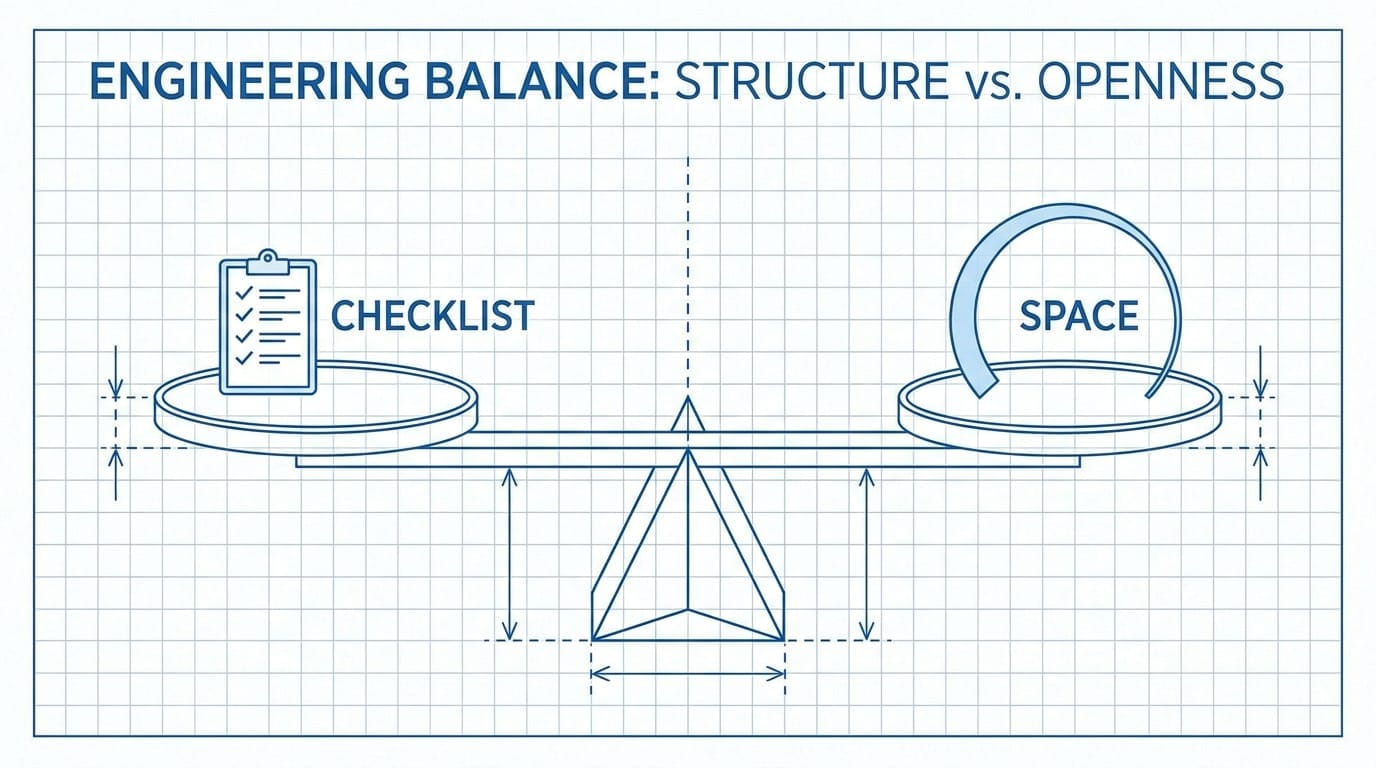
- Set a hard stop on your prep time.
- Before you begin preparing for anything, decide in advance how long you'll spend on it - and treat that limit like a meeting you can't reschedule.
- This isn't about cutting corners. It's about teaching your brain that there is a point of diminishing returns, and you're not going to chase past it.
- Try the rule of halves: cut your usual prep time in half for low-stakes tasks, and see what actually suffers. Spoiler: usually nothing.
- Separate the essential from the hypothetical.
- Ask yourself: What do I actually need to know or have ready for this? Write that down. Everything else is hypothetical prep - preparing for scenarios that may never happen.
- Hypothetical prep feels productive but it's mostly noise. It keeps your mind spinning without adding real value.
- Focus your energy on the core 20% of preparation that handles 80% of real situations.
- Practice deliberate under-preparation on small things.
- Pick something low-stakes this week - a casual call, a short errand, a minor task - and intentionally prepare less than you normally would.
- Notice what happens. Most of the time, you handle it just fine. Your brain needs that evidence to start loosening its grip.
- Each small win chips away at the belief that you need maximum preparation to survive minimum challenges.
Don't miss out on future updates!
Join our newsletter to get the latest insights delivered straight to your inbox.
Here's the quiet truth: the version of you that shows up calm, rested, and trusting yourself is almost always more effective than the version that showed up having memorized every possible contingency. Preparation is a tool, not a security blanket. Use it with intention, set it down when it's done its job, and give yourself permission to simply be ready enough - because most of the time, you already are.