Crafting a Personal Soundscape for Lasting Calm

Let's get right to it, because the data here is just too good to ignore. A study published in Scientific Reports found that listening to natural sounds, like a babbling brook or rustling leaves, can physically alter the connections in our brains, reducing our body's natural fight-or-flight instinct. That's not just a feeling; that's a measurable physiological shift of up to 30% toward a state of rest and relaxation. So if you've ever felt overwhelmed and thought, 'I just need some peace and quiet,' you were tapping into a profound biological truth. What you hear directly shapes how you feel.
Why Your Ears Are Your Secret Weapon Against Stress
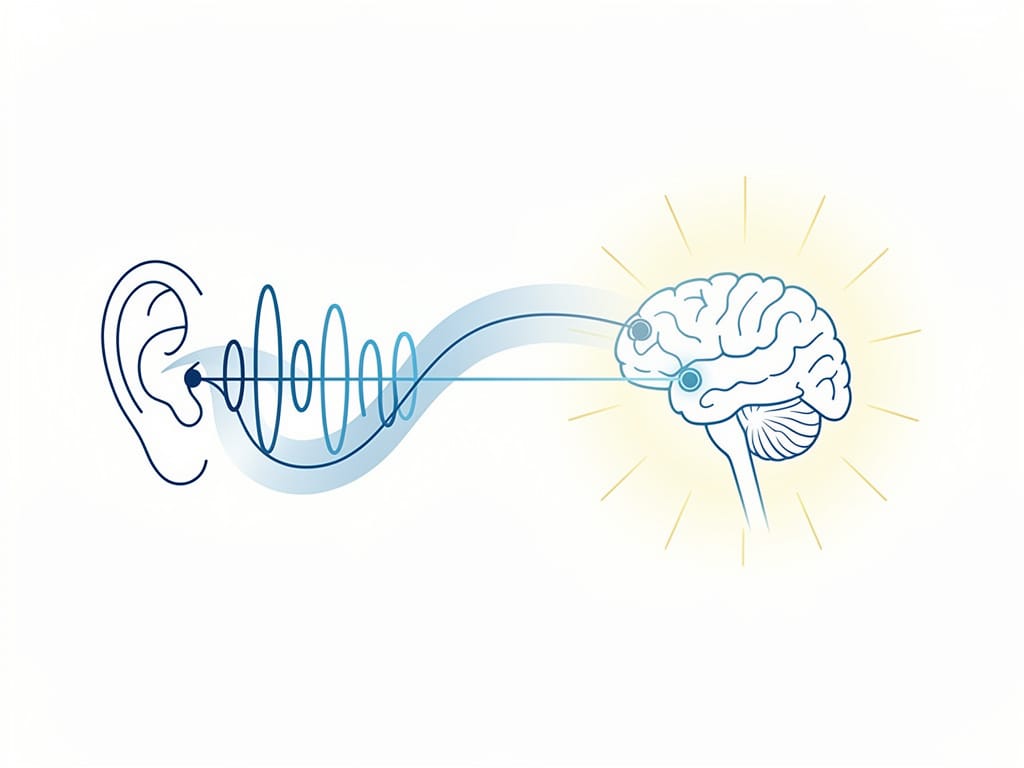
You've probably noticed how a jarring car alarm can instantly spike your anxiety, while a favorite song can make a tough day feel manageable. This isn't a coincidence. Sound waves are converted into electrical signals in the ear, which then travel to the brain's auditory cortex. This part of your brain is deeply connected to the amygdala and limbic system, the command centers for your emotions and memory. Research from the University of Nevada has shown that certain types of music can reduce cortisol-the primary stress hormone-by as much as 25%. You're essentially giving your nervous system a direct instruction to stand down, all without saying a word.
Nature's Soothing Symphony
There's a reason so many relaxation apps are filled with the sounds of rain, oceans, and forests. It's called the biophilia hypothesis-the idea that we have an innate connection to nature. And the numbers back it up. A Brighton and Sussex Medical School study used fMRI scans to observe brain activity and found that listening to nature sounds produced brain patterns associated with outward-focused attention, while artificial sounds created patterns linked to inward-focused states, like worry and rumination. The shift was significant, with participants showing a 5-point average reduction on the State-Anxiety Inventory scale after just a few minutes of listening to nature.
The Power of Colored Noise
You've heard of white noise, but what about its cousins, pink and brown noise? White noise contains all audible frequencies at equal intensity, great for masking disruptive sounds. Pink noise, however, is more balanced, with lower frequencies being louder-think steady rain or wind. Studies have shown that listening to pink noise can synchronize your brain waves, improving sleep stability. In fact, one study from Northwestern University found that pulsed pink noise played during sleep enhanced slow-wave sleep (the deep, restorative kind) and improved next-day memory recall by an average of 15%. Brown noise is even deeper and can feel like a strong waterfall, which many people find incredibly grounding.
Tuning Your Brain with Binaural Beats
This might sound a bit 'out there,' but the science is compelling. Binaural beats work by playing two slightly different frequencies in each ear through headphones. Your brain perceives the difference between the two as a third, new frequency-a rhythmic pulse. This pulse can gently encourage your brainwaves to match it, a process called 'brainwave entrainment.' For example, listening to a beat in the 'theta' range (4-8 Hz), which is associated with deep meditation, was shown in a 2018 meta-analysis to produce a statistically significant reduction in anxiety symptoms compared to control groups.
- For Deep Focus: Research indicates that alpha wave binaural beats (8-13 Hz) can enhance creative thinking and reduce distractibility. One study noted a 7.5% increase in correct answers on a cognitive task while participants listened to alpha-range beats.
- For Pre-Sleep Relaxation: A study in the journal Frontiers in Human Neuroscience found that listening to delta wave binaural beats (1-4 Hz) for 30 minutes before bed helped participants fall asleep faster and report a higher quality of sleep.
- For Stress Reduction: Listening to music with a tempo of around 60 beats per minute can cause the brain to synchronize with the beat, which can lead to a calmer state. This tempo is often found in ambient and classical music designed for relaxation.
So, what do you do with all this information? You become your own audio engineer. The goal isn't just to find one 'perfect' sound but to build a library of sonic tools for different situations. What helps you focus on a work deadline might be totally different from what helps you unwind after a long day. The key is to experiment and pay close attention to how your body responds. Remember that personal preference is a huge factor; research suggests that your subjective enjoyment of a sound can account for up to 40% of its stress-reducing effect. If you hate the sound of rain, it doesn't matter what a study says-it won't calm you down!
Don't miss out on future updates!
Join our newsletter to get the latest insights delivered straight to your inbox.
Think of this as a practice, not a quick fix. Start by dedicating just 10 minutes a day to intentional listening. Try a nature soundscape one day, a binaural beat track the next. Notice the subtle shifts in your breathing, your heart rate, and your racing thoughts. By consciously crafting your sound environment, you're not just blocking out the noise of the world; you're actively creating a space for your mind to rest, recover, and regenerate. You're turning your sense of hearing into one of your most powerful allies for lasting calm.